How to stop fake report cards: QR codes that prove a card is genuine
Updated 24 October 2026
Altered report cards turn up at admissions offices and sponsors’ desks: a 60 made into an 80, or a whole card made on a home computer. A QR code on every card lets anyone check it in seconds.
How QR verification works
- Each printed card gets its own QR code, made from an unguessable link.
- Anyone who scans it with a phone sees a page from the school’s system saying the card is genuine, with the learner’s name, class, school and term.
- The page shows no marks or comments, so scanning it reveals nothing private.
- If the card was reprinted, the page says which version is the current one. If a payment was reversed or the card withdrawn, it says so.
Why no marks on the check page?
Marks are private. A QR code that shows them would let anyone who sees a card read a learner’s results. The check only needs to confirm that this card, for this learner and term, was issued by the school. The person checking compares the printed card with what they know.
Other things that make forgery harder
- A security border with fine patterns that are hard to copy cleanly.
- The school stamp and signatures on every card.
- A watermark of the crest behind the marks.
- A PDF copy of every class kept by the school, to compare with any card in doubt.
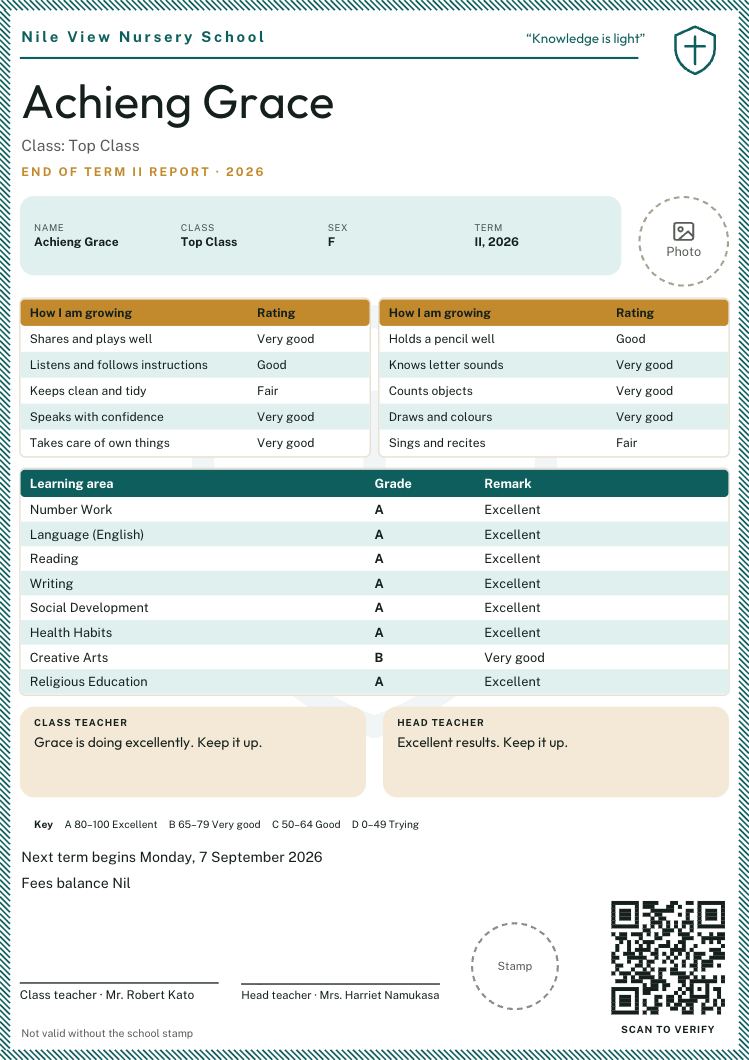
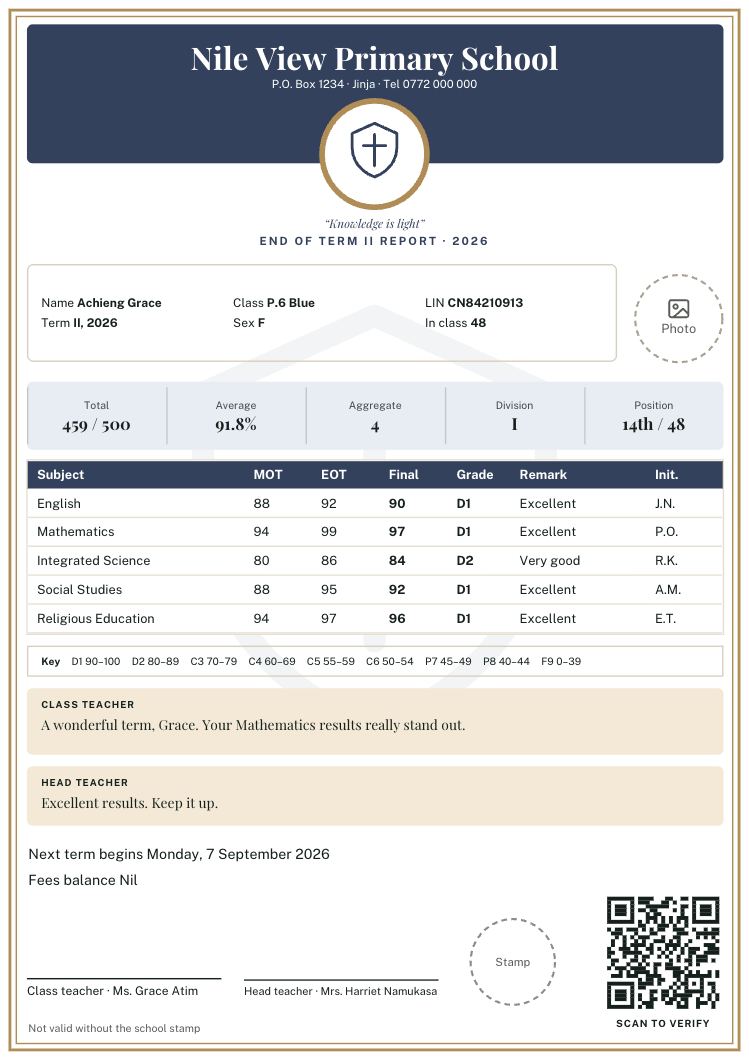
Every card checkable
Every card printed with Report Card Studio carries its own QR code. Scanning it confirms the card is genuine, without showing any marks.
Questions? Call or WhatsApp 0784 150 327, or email [email protected].